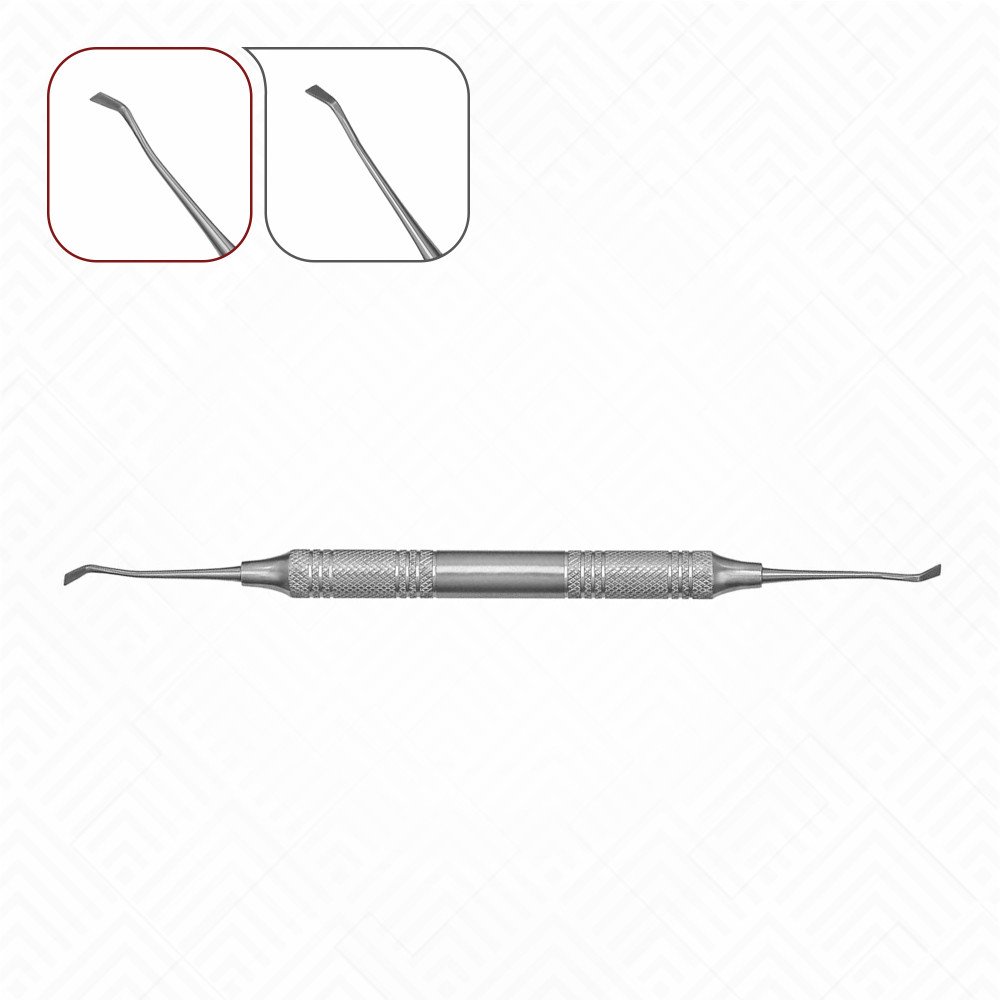
The world of restorative dentistry demands instruments that offer both precision and versatility. Dentists and dental students require tools that allow for delicate carving, shaping, and contouring of restorative materials. This blog explores a vital instrument in this field: the half hollenback carver. We will discuss its design, applications, and the importance of choosing a high-quality instrument for optimal patient outcomes.
Understanding the Half Hollenback Carver
The half hollenback is a double-ended dental instrument specifically designed for placing, carving, and contouring amalgam and other restorative materials. Its distinct feature is its fine, pointed tips, often angled to provide excellent access to interproximal areas. One end is typically shaped like a small, sharp blade, while the other end might be a pointed probe or a differently angled blade, making it a multi-functional tool for detailed dental work.
Primary Applications in Dental Procedures
The primary function of the half hollenback is in restorative procedures. After a dentist places a filling, such as an amalgam or composite resin, this instrument is used to sculpt the material to mimic the natural anatomy of the tooth. It excels at carving occlusal surfaces, defining cusps, and removing excess material from the margins of the restoration, ensuring a smooth and accurate finish that promotes proper bite alignment and patient comfort.
The Importance of Angulation and Design
The design of the half hollenback is intentional and crucial for its effectiveness. The angled blades, often referred to as contra-angled, allow dental professionals to reach difficult areas between teeth without awkward hand positioning. This ergonomic advantage reduces hand fatigue and improves the clinician's ability to create precise contours, which is essential for preventing plaque accumulation and future decay around the restoration.
Differentiating from Other Dental Carvers
While there are many types of dental carvers, such as the discoid-cleoid or the Ward's carver, the half hollenback distinguishes itself with its fine, pointed working ends. This makes it particularly suitable for intricate detail work and for shaping the interproximal areas where other, bulkier instruments cannot reach. Its slender profile is ideal for creating the subtle grooves and fossae that define a natural-looking tooth surface.
Material and Craftsmanship: The Key to Quality
The performance of any surgical or dental instrument depends heavily on the quality of its materials and construction. A superior half hollenback carver is crafted from high-grade stainless steel, ensuring durability, resistance to corrosion, and the ability to maintain a sharp edge. Precision manufacturing guarantees that the instrument's dimensions and angles are exact, providing the reliability and control that healthcare professionals depend on for perfect and precise results.
Proper Sterilization and Maintenance
Maintaining the integrity of dental instruments is paramount for patient safety. The half hollenback, like all reusable dental tools, must undergo rigorous cleaning and sterilization protocols. High-quality stainless steel construction ensures it can withstand repeated autoclave cycles without degrading. Proper care not only ensures sterility but also extends the lifespan of the instrument, making it a valuable and long-lasting addition to any dental practice.
Conclusion: A Staple for Restorative Excellence
The half hollenback carver is an indispensable tool in the armamentarium of any dentist or dental student focused on restorative work. Its specialized design enables the precise shaping and contouring required for successful and long-lasting dental restorations. For surgeons and healthcare professionals who value perfect results for their patients, selecting a well-crafted half hollenback from a trusted supplier like New Med Instruments is a critical step toward achieving clinical excellence.